The Museum of Modern Art is currently showing the installation of Dinh Q. Lê’s recently acquired work The Farmers and The Helicopters . The first Vietnamese artist to have a solo exhibition at MoMA, Lê creates work that frequently refers to the Vietnam War and presents both sides of the conflict, informed by his own personal history. The installation, in two adjacent galleries, comprises a three-channel video and a helicopter that was constructed by hand from scrap parts by two Vietnamese men: Le Van Danh, a farmer, and Tran Quoc Hai, a self-taught mechanic. The video, made in collaboration with artists Phu-Nam Thuc Ha and Tuan Andrew Nguyen, interlaces interviews and personal recollections of the war by Vietnamese men and women with clips from American blockbuster films and documentaries made during the war. This installation was first shown at the Singapore Biennale in 2008 and was a big crowd puller. because of its constant interviewing of images, the video is really more of a poem than a documentary film.
Read More ...

0 comments

Nicolas G. Hayek, Chairman of The Swatch Group, 82, passed away on Monday due to heart failure. His Swatch empire was founded in 1983 when the future of Swiss mechanical watches was threatened by the cheaper Japanese quartz watches made by Casio and Seiko. He countered the Japanese threat by creating traditionally reliable Swiss watches with revolutionary colorful design while keeping price Swatch Group today also includes several well known brand like Breguet, Omega, Longines, as well as Rado and Tissot. Hayek's son, Nic , and Swatch Group CEO since 2003, will now take the course as the Swatch Group leader.
Read More ...

0 comments

Shanghai's Pudong district will get a Venu Himalayas hotel in 2011. The art-themed hotel, managed by the Jumeirah Group  will include a modern art museum, a theatre, as well as the ubiqious retial space. The Venu Himlayas Hotel Shanghai is the sixth management agreement signed by Jumeirah Group in China.
Read More ...

0 comments

A towering figure of Chinese art, Wu Guanzhong passed away peacefully late Friday night in a Beijing Hospital. He was 91 years old and one of the leading Chinese artists of the 20th century. Born in Yixing, Jiangsu Province in 1919, Wu studied at the China Art Academy of Hangzhou and was trained in oil and ink painting, graduating in 1942. From 1946 to 1950, he studiedat the Ecole Nationale Supérieure des Beaux-Arts in Paris on a government scholarship. Upon his return to China, he painted primarily in oil, before transiting to ink painting in the 1970s. He will remain known for his crossing and synthesising of both oil and ink art forms, bridging the painting traditions of the East and the West. I last wrote about him last year for the IHT when SAM mounted a restrospective exhibition of his works.
Read More ...

0 comments


Europe and Asia have had close relations for thousands of years. Commercial and political networks developed both on land - via the Silk Road - and on sea, and trade opened the way for the spread of major religious and philosophical trends. A new exhibition, A Passage to Asia, throws light on 2,500 years of exchanges between Asia and Europe, presenting a selection of over 300 decorative and artistic objects never previously shown in Europe: burial urns, bronze ritual drums, gold jewellery, ivories, old maps, and unique textiles, as well as extraordinary cargo recently recovered from shipwrecks at the bottom of the sea.
Read More ...

0 comments

Collaborations between international fashion houses and Chinese artists have become de rigeur in recent years. Lacoste asked Chinese artist Li Xiaofeng to create two different polos for its 2010 Holiday Collector’s Series and the result is quite interesting. Li is known for his clothing sculptures using broken porcelain shards recovered from ancient archaeological digs, some dating from the Ming Dynasty. Here, he’s created a limited edition printed polo, using shards of blue and white porcelain from the Kangxi Period with lotus and babies designs. This particular type of folk ceramics reflected the Imperial taste at that time and was only used by the upper classes, as technically the painted blue background on a white base that delineated the figures was more complex to produce. Li first shaped and polished the shards as usual, but instead of drilling holes and linking them with wire, he photographed each (251 for the men’s polo and 304 for the women’s) and placed them one by one in a life-size digital pattern of the polo’s front, back and sleeves. The final touch was the addition of a white Lacoste crocodile logo, the rarest breed in the brand’s collection. The printed Porcelain Polo is limited to 20,000 pieces for both men and women. Li also created a Porcelain Polo art work using new porcelain shards (China forbids the export of ancient artefacts including porcelain shards). Inspired by the early Ming Dynasty, he painted porcelain bowls with images of a scholar contemplating a scenic landscape surrounded by what is referred to as the ‘Four Gentlemen’ in classical Chinese painting - namely an orchid, bamboo, chrysanthemum and plum blossom. He also drew the crocodile logo and letters on the bowls as well as the phoenix, a symbol of good fortune. The Porcelain Polo was unveiled in Paris on Friday at the Musée des Arts et Métiers and will be shown in Bejing in the fall at Li Xiaofeng’s first one-man show organized by the Red Gate Gallery.
Read More ...

0 comments


Cantor Arts Center at Stanford University is presenting “Tracing the Past, Drawing the Future: Master Ink Painters in 20th-Century China” with more than 110 works of four well known Chinese ink masters. These include monumental portraits, vibrant bird-and-flower painting, and spectacular landscapes by Wu Changshuo (1844–1927), Qi Baishi (1864–1957), Huang Binhong (1865–1955), and Pan Tianshou (1897–1971). Collectively known in China as the ‘Four Great Masters of Ink Painting,’ these artists faced the dual challenges of negotiating the impact of encounters with the West, while inventing new directions for long-held practices of ink painting.
Read More ...

0 comments


More Bruce Lee-related films are in the making. After Ip Man, Ip Man2 and The Legent is Born: Ip Man, an unofficial prequel to the Ip Man pair, there are now two more films in production. Wong Kar-wai is now filming, The Grand Master, another telling of the story of Lee’s tutor with Tony Leung starring. That film is due to be released in time for Christmas. Meanwhile principal photography should start later this month on Bruce Lee, My Brother, a new biopic starring new comer Aarif Lee and directed by Raymond Yip.
Read More ...

0 comments

So far, 2010 has been a very good year for the Indian art market.A new report by ArtTactic shows that both volumes and average auction prices in the Modern Indian art market are now back to levels seen at the peak of the Indian art market in June 2008 – a remarkable recovery after volumes in the Modern Indian art market dropped 63% between September 2008 and March 2009, and prices fell 46% in the same period.
The sharp recovery in the Modern market is also starting to rub off on the Contemporary Indian art market, which has remained subdued after market confidence evaporated during the downturn. The Contemporary Indian art market dropped 93% in volume and auction prices plummeted 85% between autumn 2008 and spring 2009. However since then, average prices are only 35% below its peak, and volumes have more than doubled since June last year.
Read More ...

0 comments

The West Kowloon Cultural District Authority has announced that Lars Nittve, a museum director and curator with years of experience heading London’s Tate Gallery of Modern Art and Stockholm’s Moderna Museet, has been appointed Executive Director, Museum Plus ( M+), a groundbreaking new museum concept planned at the future West Kowloon Cultural District. The appointment is effective January 2011.
M+ has been envisionned as a forward-looking cultural institution focusing on 20th to 21st-century visual culture, with four initial broad groupings including design, popular culture, moving image and visual art (including ink art). Now they just need to build the museum!
Read More ...

0 comments

One hundred years ago, Vaslav Nijinsky performed the “Danse Siamoise” with the Ballets Russes at the Paris Opera. Part of the ballet “Les Orientales,” the dance was created by Michel Fokine and is believed to have been inspired by the performance of a Thai classical troupe, the Nai But Mahin Dance Company, that Fokine had seen in St Petersburg in 1900. Little is known of the original choreography for the “Danse Siamoise,” but, using old photographs and paintings, the Thai choreographer and dancer Pichet Klunchun has now created “Nijinsky Siam,” a 55-minute stage “dialogue” with Nijinsky, where Mr. Klunchun explores the Russian dancer’s understanding of Thai classical dance and responds to it. For the full IHT story
Read More ...

0 comments


A two-foot high Qianlong Period gilt bronze censer sold for $1.2 million at Bonhams & Butterfields’ sale of Asian art in San Francisco. The 250-year old censer was described by the auctioneers as “fine and rare;” its bell-form bowl is decorated overall with rows of bronze lotus petals above a base of three gilt bronze elephant heads. Bidding had opened at $40,000 and was ultimatly bought by an Asian buyer. The censer came from the private collection of Corinthian Studios in Washington State.
Read More ...

0 comments

The Ritz-Carlton Shanghai, Pudong, designed by architect Cesar Pelli, has just opened. It's the luxury hotel brand’s second property in the city, and its seventh in China. The 285-room Ritz-Carlton Shanghai, Pudong occupies the top 18 floors of the Shanghai ifc South Tower. The design and style of the hotel is contemporary, with hints of new interpretations of 1930’s Shanghai Art Deco. This gives a great sense of place to the hotel as guest rooms and restaurants embrace sweeping views over The Bund.
Read More ...

1 comments


Absolut is planning to release this August a limited-edition of Absolut 72 for the Chinese market. The bottle was designed by Chinese artist, Gao Yu, and the design is inspired by the legend of the monkey god (Sun Wukong), who travelled to the east and acquired the powers of the “72 transformations” - or shape shifting.
Vodka lovers will be glad to know the bottle's contents remain true to the classic recipe.
Read More ...

0 comments


Art buyers can now bid at art auction via their blackberries. At Saffronart's latest online auction several customers tracked the auction and bid through the auction house’s groundbreaking mobile application . About 10 lots were sold to bidders using Blackberrys and iPhones, including M.F.Husain’s Untitled work for $235,750.
Read More ...

0 comments

I recently interviewed the artistic director of Carnegie Hall, Sir Clive Gillinson, who had some interesting views about how to make classical music less ritualistic. He also talked about the plus and minus of generous government's support of the arts in Europe vs the reliance on donations and sponsorship in the US. See the whole Newsweek Q and A here.
Read More ...

0 comments


Designer Kenzo Takada started painting 10 years ago, after he sold his label to French luxury goods giant LVMH and retired. Eight self portraits are currently on show in Paris. They show him in traditional flower-printed kimonos that recall the prints his label is known for. Very colorful.
Read More ...

0 comments


The panda is often associated with China and in Zhang Qikai’s paintings, the cuddly animal cuts a lonely, solitary figure exploring and often lost in the material world around him, sometimes embracing a consumer culture, but often overwhelmed by it. The artist’s latest works are now showing in Taiwan.
Read More ...

0 comments


Chinese contemporary art is not all about Political Pop and Cynical Realism; some artists have reacted to the pink Mao and eschewed the ‘concept over form’ approach, by embracing a very painterly realism of intimate scenes of everyday life. Amongst the champion of the Chinese Neo-Realism movement is Wang Yidong, known for his romanticized depiction of the Chinese feminine form. This exhibition present a retrospective of Wang’s work since 1986, showing the fusion between western classical painting, Chinese traditional painting and folk art that the artist favours.
Read More ...

0 comments


Budding artists for the Red Bull Art of Can have come up with some ‘uniquely Singaporean’ entries a quirky Merlion with fangs and a durian made out of the drink's cans. Hard to get a real feel for them on the website, because the photos are so small, but I quite like the pot with orchids entry. Lots of little details. The three winning pieces will be announced Jly 2. The public also has a chance to designate a People’s Choice Award by casting votes online at www.redbullartofcan.sg.
Read More ...

0 comments

Chinese screen goddess Gong Li has finally signed to play opposite Hong Kong star Andy Lau in a remake of What Women Want. This should be a very interesting pairing. Shooting has already started this month in Beijing. The storyline of this remake should prove very popular within the current Chinese society context and the rise of the career woman. Fans will have to wait as the film is not set to be released until next Valentine.
Read More ...

0 comments

Some of the finest Chinese paintings in the Freer Gallery's collection are now on view, including several by well-known Chinese artists that have not been displayed in years. Diverse traditional categories are represented, such as religious and secular portraits from the Northern Song dynasty (960-1127), landscapes from the Southern Song dynasty (1127-1279), paintings of literati during the Yuan dynasty (1279-1368), artworks produced in the Zhe and Wu schools of the Ming dynasty (1368-1644), and images of Orthodox and Individual painters of the early Qing dynasty (1644-1911). In total, "Masterpieces of Chinese Painting" offers twenty-seven iconic works of Chinese paintings from the late 10th to the early 18th century.
Read More ...

0 comments

Still-life is a bit of a neglected genre nowadays. Korean artist Choe Jeong-hyeok's ‘Natural-Topia’ look so real and fresh, you’d think they’re digital photographs that have just been snapped. His key motif is fruit, and he strives to deliver "still objects that are full of life". Yet, there is something also very unreal about them. Apples ripen in autumn, but his paintings showcase them in winter and spring. Some works show apples and also blossom on the same branches, showing two “realities” at once. Choe refers to this as "virtual existence". The paintings seem to give a true representation of apples, but the fruit is part of a fictional world. All objects are reconstituted in his head and fingertips.
Read More ...

0 comments


A retrospective of Zeng Fanzhi’s work has just opened at the National Gallery for Foreign Art in Sofia, Bulgaria. The group of 18 paintings are from the artist’s personal collection, including some from his Mask Series that brought him to collectors’ attention in the 1990s. I particularly like Mask No 13, where a man caresses a Dalmatian with his enormous, out of proportion hands (a signature style from the artist). There is a moment of joy in this painting which is quite unusual in Zeng's works. There is also a rare self-portrait, dating 2009, where he sits on a stool in front of a mountainous landscape, wearing a long red robe. Zeng holds a paint-brush in his hand which appears to have started a line in the air (recalling his most recent landscape works of frenzied brush strokes.). If you want to know more about this artist, I wrote this IHT story a few years back.
Read More ...

0 comments

An interestingnew exhibition of contemporary Tibetan art just opened at the Rubin Museum of Art in New York. ‘Tradition Transformed: Tibetan Artists Respond’ features nine artists each exploring contemporary issues--personal, political, and cultural--by integrating the centuries-old traditional imagery, techniques, and materials found in Tibetan Buddhist art with modern influences and media. Of the nine artists, five were born in Tibet, three come from Nepal and one was born in India, but only three (Dedron, Tenzin Norbu and Penba Wangdu) continue to live in their Himalayan homelands, while the others have emigrated to Europe and the United States. Mostly trained in traditional painting and the strict interpretations prescribed by Buddhist religion, these nine artists break the spiritual formulas and artistic norms by experimenting with alternative media, extracting sacred symbols from their religious context and repurposing them for self-expression.
Read More ...

0 comments

It’s fashionable to go green and even luxury fashion houses are embracing the trend. Gucci is the latest one to start using FSC Certified paper for its packaging which is 100% recyclable. Shoes will be come in a single flannel package instead of two and gift boxes will be available on request. The boxes will come devoid of plastic laminated surfaces and plastic laminated surfaces and coated tissue paper. Ribbon and garment bags will now be crafted with polyester and cotton. The company will also start using eco-friendly mannequins, created with shockproof polystyrene which is a lasting and recyclable materials.
Read More ...

0 comments

Guanzhou is building itself a clock tower, twice the size of Big Ben. When it is finally installed at the end of June it will be the world’s largest mechanical clock with four 13 metres diameter faces with minute hands 7.8 metres long. The clock was made in England by the family firm Smith of Derby, also responsible for timepieces in St Pancras station and St Paul's Cathedral. The tower will include a viewing gallery so visitors can inspect the movement. It will be opened to the public next year.
Read More ...

0 comments


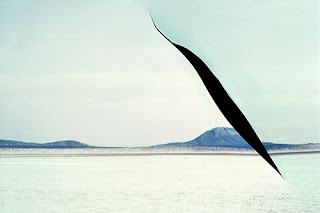
The New York-based Singaporean photographer John Clang has always liked to challenge people’s visual perceptions with his works. His new exhibition, Con(Front) is a more intimate series of visual dialogues that pin down the photographer's response to his environment in New York and his search for a sense of place and identity. I especially like his open wound series, where the photograph of a beautiful landscape is slashed; simple, but effective
Read More ...

0 comments

A wonderful play (actually possibly one of the best I've seen by a Singapore playwright) and a tour de force for the actress Margaret Chan, who manages to captivate an audience with her solo performance playing a Nonya matriarch reliving her life. More than any visit to the Peranakan museum, this 26-year old dramatic monologue by Stella Kon brings the Peranakan culture and its tradition to life. Chan was in turn charming, funny, authoritative and scheming. From a young bride plotting to get the favours of her in-laws and getting the upper hands on her sisters in law, to becoming the mistress of a grand home, entertaining guests and managing her staff, Emily gives an insight into a Nonya’s lifestyle. Catch it if you can
Read More ...

0 comments

Shen Shaomin’s first solo exhibition in New York just opened. The conceptual artist loves to push unconventional materials to new limits, while commenting on contemporary issues. This exhibition feature his new bonsai ink installations. Here, the tortured ornamental trees become a metaphor for controlling nature and beauty. With such practices as foot binding in mind, the artist illustrates violence done to reshape the work of nature. He pushes the limits of traditional bonsai arts, employing a wide range of techniques to mutilate his bonsai trees, bending them to his will. The exhibition also includes Shaomin’s G8 Summit installation, portraying iconic world leaders. The distorted framed canvases cause the faces of the public figures to shift, thus revealing the ironic mutability of politicians and their views or promises.
Read More ...

0 comments


Christie’s sales of South Asian modern and contemporary art realised a total of 18.1 million and 91% sold by lot. The top lot, Syed Haider Raza (b. 1922), Saurashtra, 1983 (Photo) set a world auction record for any modern Indian Work of Art at $3.48 million. The monumental painting was bought by a private Indian museum. Six new artist world auction record prices were set for Aisha Khalid; Sunil Gawde; Naiza Khan; Imran Qureshi and Soren Pors & Aparna Rao. In the crowd was famed artist Maqbool Fida Husain who saw all works by his hand sell successfully.
Read More ...

0 comments


Master ceramist Fong Choo has won many awards for this miniature and whimsical teapot forms. Full Circle: An Exhibition of Diminutive Teapots by the U.S-based ceramicist is opening at Sculpture Square in Singapore this weekend. More than the shapes, I love the colors he achieves…
Read More ...

0 comments

Christie’s will auction in September The Sze Yuan Tang Archaic Bronzes from the Anthony Hardy Collection as part of its Fall Asian Art Week. This collection of approximately 120 lots valued in excess of $15 million will be led by a very rare and important archaic bronze ritual tripod food vessel, Li, from the late Shang dynasty, 12th century BC. Many of the bronze vessels from the Collection date to the 13th–12th centuries B.C., the Golden Age of the Shang dynasty. This was the period when Anyang, in Northern Henan province, served as the capital, and when some of the finest and most sophisticated bronzes were created. The bronzes were employed by the Shang ruling class for ritual offerings of food and wine to invoke the aid of ancestral spirits. One of the most famous bronzes in the collection is the striking li, a ritual tripod vessel for cooking grains or meat, from the late Shang dynasty, 12th century BC. The vessel is cast with three startling taotie animal masks, each formed by a pair of confronted zoomorphic creatures and which, in full face, feature an animal mask with formidable horns and sharply angled eyes.
Read More ...

0 comments

Shangri-La Hotels and Resorts will open a hotel in Lhasa, Tibet in 2012. The new property with 350 rooms promises to be one of the largest hotels in Tibet, offering guests spectacular views of mountain peaks. The interior design will use traditional Tibetan architectural motifs, but customers will still have access to all the latest technologies in their rooms.
Read More ...

0 comments

It’s hard not to smile, looking at the latest works of Chinese sculptor Wu Liang Yen. Charaterized by their beaming smiles, upward tilted head, Wu’s youths seem to be full of optimism. Like model students, they’re all wearing a red tie around their necks. Yet their over exaggerated large heads could be a symbol of their inflated desires. The star placed underneath each figure gives the overall composition the aspect of a trophy prize that perhaps a parent can bring home and display to others.
Read More ...

0 comments

CUT2010: Parallel Universe, a new exhibition of Southeast Asian artists, explores perceptions and realities through the tilted perspectives of photography. Some of the works left me completely cold. But I did like Birdpayers, an on-going multi-site project by Sara Nuyetemans and Arya Pandjalu that combines performance, exhibitions and talks. By representing four major religions, Judaism, Catholicism, Hinduism and Islam through bird houses shaped as a church, a synagogue, a mosque and an Hindu temple and then putting them as mask on the heads of people standing next to each others, the two artists seem to be talking about religious harmony. Hard to say what this is about, but the four strange-looking protagonists surely challenge perception and amuse at the same time. I also liked the visually arresting works of Tanapol Kaewpring (Thailand), who places transparent glass cube in natural and urban environments as a metaphor for the systems that constrain us. Inside the boxes are fire, smoke, light, water, forces of nature that have the capacity for great change, but can also be controlled.
Read More ...

0 comments

The Mongolian Beijing-based artist Xue Mo has a new solo exhibition inspired by the Italian Renaissance paintings and composition. While in the past Xue had relied on colorful, ethnical costume of the Mongolian step to enliven her portraits, here she strips her subjects to the bare minimum, highly stylizing their features, in a way reminiscent to the work of Piero della Francesca and Andrea Mantegna. Using thin paints and very fine brushes, Xue’s portraits evoke a timeless Chinese beauty, full of grace, but also strength. “When western people talk about Mona Lisa, I imagine Chinese people discussing the classic Chinese novel "Dream of Red Mansions." Although one is a painting and the other is a literature work, they illustrate the kind of ideal beauty,” the artist explains, "What is classified as ideal beauty is an important question influencing culture, history, architecture and living. In my latest body of works, I interpreted what is ideal beauty according to my definition."
Read More ...

0 comments

I’m always interested in art shows I can take my three children to. Art Garden: Children’s Season at the Singapore Art Museum is a wonderful opportunity to expose little ones to imaginative and interactive works. Dawn Ng's giant floating rabbit sculptures and Sandra Lee's illustrated enchanted forest create a friendly, whimsical world that will stimulates their curiosity. Children can watch mechanical flowers grow and bloom, observe everyday objects come to life in spot-motion films and ‘grow’ trees or ‘divert’ streams with the help of interactive new media.
Read More ...

0 comments


Hong Kong confirmed its position as the premier center for jewellery auction with the results of the Christie’s sale. At more than US$60 million, this was the most important one ever organized by Christie’s anywhere in the world. The top lot of the sale was a single-strand jadeite bead necklace which sold for $7.3 million. It is interesting to note that the Kashmir sapphire bracelet which sold for $6.9 million had been sold by Christie’s previously in 1988 for $902,000, which represents $1.7 million in today’s currency.
Read More ...

0 comments

Art HK 2010 is over and the sales numbers are in…The 4-day art fair attracted a total 46,115 visitors, up 65 percent on 2009. Major sales to Asian based collectors included:

• The Inescapable Truth, by Damien Hirst (2005) – the first formaldehyde work by the artist to be shown in China – was sold by White Cube for £1.75 million.
• Green Wall - Husband and Wife, by Zhang Xiaogang (2010) was sold by Pace Beijing for US$1 million.
• Galerie Lelong sold Sean Scully’s More Light (1988) for US$750,000.
• Anish Kapoor’s Untitled (2010) was sold by Lisson Gallery for £550,000.
• Sperone Westwater sold Liu Ye’s Composition with Bamboo and Grass (2007-08) for US$650,000.
• Yoshitomo Nara’s Rock’n Roll the Roll (2009) was sold by Marianne Boesky Gallery for US$350,000.
Read More ...

2 comments

Hong Kong film director and producer Peter Chan is preparing to get back in the director's chair for his next film, tentatively titled Wuxia. Filming should start in Yunnan in August. Donnie Yen and Takeshi Kaneshiro are confirmed as the two main leads! Chan was producer on Bodyguards and Assassins, also with Donnie Yen, and he’s directed Takeshi Kaneshiro in Perhaps Love. For Wuxia, Yen will play a man, trying to live invisibly in an obscure little town, trying to cut his ties with his past. After Yen accidently kills two most wanted criminals passing by in the town, his identity becomes the focus of attention of a rundown cop, played by Kaneshiro. The female lead has yet to be cast. Chan is targeting to release the film next Summer.
Read More ...

1 comments

The collection of Imperial Chinese porcelain assembled by Alan Chuang Shaw Swee, Chairman of the Chuang’s Consortium International Limited, is one of the most important collections of Chinese porcelain to have been built over the past 30 years. A new bi-lingual book, The Alan Chuang Collection of Imperial Chinese Porcelain, catalogues his “treasures,” illustrates the highly individual taste of this collector. Upright vase shapes and cups are preferred to dishes and bowls; flower and landscape subjects are favoured over more formal decorations of dragons. The finely selected group of fine Yuan and early Ming wares includes the superb early 14th century qingbai figure of Guangyin, rivalled only by the famous piece in the Capital Museum, Beijing.
Read More ...

0 comments

Christie's got its second white glove auction (ie 100% sold) with its sale of the Songzhutang Collection’s rhinoceros horn carving, setting two world record for such carvings at $5.12 million, one for a three-string’ rhinoceros horn vase and another for an ‘Orchid Pavilion’ rhinoceros horn libation cup (Photo). However, its Imperial Sale of Important Chinese Ceramics and Works of Art only sold 64.7%, a very disappointing result in the current ‘buy-buy’ environment. Still the sale gathered $56 million, nearly doubling the pre-sale estimate, indicating that when collectors were bidding, they were doing so aggressively. Buyers were both established and new clients to Christie’s, primarily from Greater China, but with a significant percentage of the sale selling to clients from Europe and North America. The highlight of the sale, a magnificent early Ming gilt-bronze Buddha from the Xuande period, doubled its unpublished pre-sale estimate to sell for a record $9 million. Also breaking a new auction record was the jadeite tripod censer and cover which more than tripled its pre-sale estimate when it sold for $4.4 million. Imperial ceramics, jades and Buddhist sculptures were the most sought-after categories in the sale.”
Read More ...

0 comments